Bramble Berry's Essential Oil Philosophy

Information about essential oils is everywhere you look. Just one online search turns up 68 million results and counting. Each result says something different about essential oils – the way they smell, where they originated, what they claim to do. One source says bergamot essential oil helps with anxiety and clears the skin, while another source says petitgrain essential oil helps boost the immune system.
You may notice our essential oil descriptions look a little plain compared to some – you won’t see any information about them boosting the immune system. There’s a very specific reason why that’s missing from the page.
Bramble Berry’s essential oil descriptions
The descriptions usually include what the essential oil smells like, how it’s distilled, its country of origin, its botanical name, what part of the plant it’s from, its flashpoint, and any safety information. For instance, lavender 40/42 essential oil is steam distilled and originates in France. Lavender is also thought to alleviate headaches, heal burns, etc. However, these are drug claims.
The US Food and Drug Administration regulates cosmetics and drugs, but the requirements for each are quite different. It depends on a number of factors, including what claims are on the label.
According to
the FDA
website, the law defines a cosmetic
as:
“The Federal
Food, Drug, and Cosmetic Act (FD&C Act) defines cosmetics
by their intended use, as ‘articles intended to be rubbed,
poured, sprinkled, or sprayed on, introduced into, or otherwise applied to the human
body…for cleansing, beautifying, promoting attractiveness, or altering
the appearance’ [FD&C Act, sec. 201(i)]. Among the products
included in this definition are skin moisturizers, perfumes, lipsticks, fingernail
polishes, eye and facial makeup preparations, cleansing shampoos, permanent waves,
hair colors, and deodorants, as well as any substance intended for use as a
component of a cosmetic
product.”
If you claim your product moisturizes, hydrates, etc., it’s a cosmetic and can be regulated as such. That means the product doesn’t need to sent in for approval by the FDA, and your company or product formulations don’t need to be registered with them. It’s your responsibility to ensure your product is made with skin-safe ingredients and labeled properly. Learn more about cosmetic regulations here. As for soap, if it only claims to cleanse the skin and meets the FDA’s definition of soap, it’s regulated by the Consumer Product Safety Commission. If you include any cosmetic claims about the soap, it’s regulated like a cosmetic.

In contrast, the
law defines a drug as:
“The
FD&C Act defines drugs, in part, by their intended use, as
‘articles intended for use in the diagnosis, cure, mitigation, treatment,
or prevention of disease’ and ‘articles (other than food)
intended to affect the structure or any function of the body of man or other
animals’” [FD&C Act, sec.
201(g)(1)].”
So, if you claim your product diagnoses, treats, cures, or prevents disease, or if you claim it affects the function of the body, it has to be regulated like a drug. That means your business will need to be registered and your products will need to be listed with the FDA. The products will also require testing. Learn more about FDA drug regulations on their website. We also highly recommend reading Soap and Cosmetic Labeling by Marie Gale.
If you’re looking for more information on FDA regulations for cosmetics, drugs, and soap, check out the FDA’s website. If you have questions, the FDA does respond to emails – we have tested this several times. Click here to get their contact info. It’s so important to make yourself familiar with these laws when making and selling soap.

Long story short, all the products we sell are only intended for use in cosmetics and soap. If we claimed they helped with acne or headaches, they would need to be tested and registered with the FDA.
People often ask us about ways to work around the regulations. For instance, adding “thought to” or “believed to” in front of the claim, or adding that it’s thought to cure a disease but hasn’t been tested by the FDA. That can be a gray area, so we choose to err on the side of caution. If there’s any chance a customer believes it will cure a disease, even if you don’t explicitly say so, we recommend avoiding it. That may be overly cautious for some, but our main concern is helping small business owners make informed decisions.
More information about Bramble Berry’s oils
While our essential oils won’t clear your eczema or help with digestion, they still have a lot to offer. They’re 100% pure and come from natural sources unless otherwise stated. To ensure that purity, they’re spot tested using gas chromatography mass spectrometry (GS/MS). Those tests involve separating, identifying, and quantifying the complex mixtures of molecules in the oils to find possible adulteration. We also offer documentation about essential oils that can be requested by emailing [email protected].
Some of our essential oils are sourced locally here in the Pacific Northwest, which helps keep the prices lower. Those we can’t find locally come from vendors we trust and who we’ve been working with for years. We buy them in very large quantities and go through them quickly, which also helps keep the price down. That means you can focus on all the different ways to get creative with your favorite essential oils.

Why we love essential oils so much
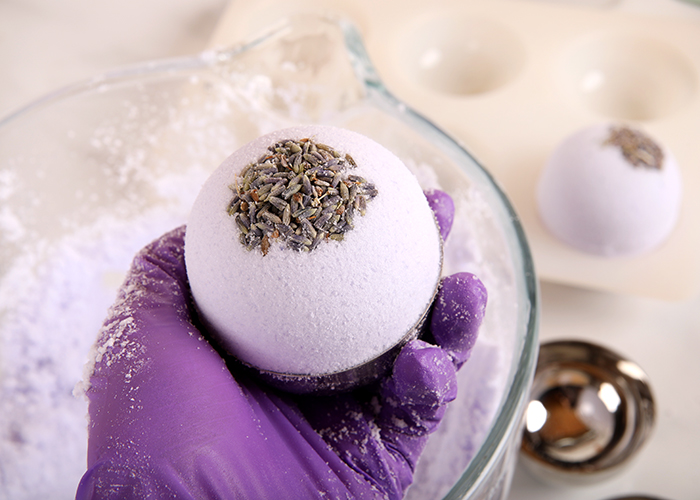
Essential oils add a natural and fresh scent to soap, lotion, bath bombs, and more. Whether you prefer earthy tea tree essential oil, spicy ginger essential oil, or bright grapefruit essential oil, there is something for everyone.
Fragrance and Essential Oils Tags: