




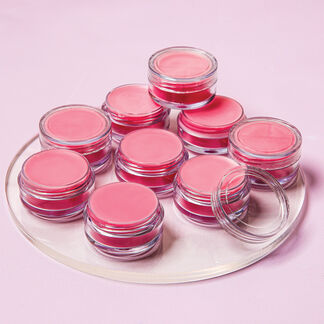




Makers love crafting their own cosmetics at home. It allows you to select your favorite ingredients and curate products to fit your preferences. Benefits include cost-effectiveness, customization, and the ability to tailor formulas to specific skin needs.
Popular DIY Cosmetic Projects:
- Lip balm and lip gloss
- Blush, bronzer, and highlighter
- Face powder and setting powder
- Tinted moisturizer, concealer, and foundation
- Lip scrub, face masks, and cleansers
Shelf life is an important consideration when making cosmetics at home. Products that are less susceptible to microbial growth will have a longer shelf life. These include water-free formulas like lip balms, body butters, and scrubs. Preservatives are recommended for products made with water or products that may get water splashed on them during use. If you are unsure which preservative to use for a specific project, Bramble Berry has a Preservatives Quick Guide.
For makers who want a guided starting point, Bramble Berry also offers DIY cosmetic kits that walk you through the process from start to finish. These kits include step-by-step instructions and the exact ingredients needed for the project. Mastering the basics will help you eventually move on to completely customized cosmetics.
How to Make Your Own Cosmetic Recipes:
- Start with simple product types that have fewer variables, such as lip balm, body butter, or scrubs
- Learn the role of each ingredient and how they affect structure, firmness, and absorption
- Begin with tested formulas or kits, then make small, controlled changes instead of creating recipes from scratch
- Work in percentages by weight rather than volume to keep formulas consistent and easy to scale
- Keep notes on ingredient ratios, substitutions, and how the product performs over time
- Move into emulsified products like lotions and creams after you understand oil-based formulas
- Build recipes with a clear purpose, using proven formulation principles as your framework
- Select cosmetic packaging that supports your formula, protects the product, and matches how it will be used, stored, and handled
Can I make a cosmetic product preservative free?
Yes, but only if the product does not contain water. Products made without water, such as lip balm, body butter, and balms, do not need a preservative. When stored properly, these types of products should last around a year. Any product made with water, or exposed to water during use, should include a preservative. Ingredients like rosemary extract, vitamin E, or essential oils do not replace preservatives, and they do not prevent mold or bacterial growth.
What is pH in cosmetic making?
When making cosmetics, it’s important that the pH of a product aligns with the natural pH of skin or hair. Skin and hair have a slightly acidic surface, which helps maintain the skin’s acid mantle and the hair’s protective outer layer. Products that fall too far outside this range can feel uncomfortable on skin or leave hair feeling dry and brittle. It is also important to consider pH when choosing a preservative, since certain preservatives are formulated to work within specific pH ranges.
How can I measure the pH of my products?
pH can be measured using pH strips or a digital pH meter. pH strips are a simple option for beginners, while digital meters offer more precise readings. Testing should be done after the product has fully cooled.