


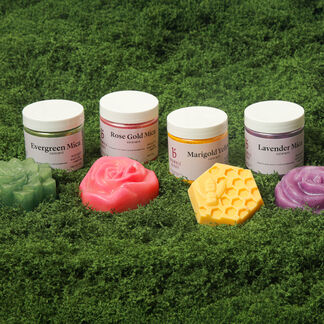


Micas are mineral-based colorants formed when rocks are exposed to extreme heat and pressure deep in the earth. There are more than 20 types of mica minerals. Once mined, they're milled into a fine powder and coated with pigments or dyes to create the full spectrum of colors you see here. Bramble Berry's mica colorants are cosmetic grade and ethically sourced.
Unique Ways to Use Mica Colorants in DIY Projects
- Bronzer and eyeshadow — Pressed or loose, mica is the base ingredient in most commercial shimmer cosmetics. Blend with a binder like isopropyl myristate to press your own palette. Confirm eye-safe or lip-safe status on the product listing before using on the face.
- Nail polish — Mix mica into a clear nail polish base for a custom shimmer shade. Start with a small pinch of mica per 10 ml of clear base and shake well before each use. Consider adding fragrance for an extra layer of customization.
- Salt and sugar scrubs — Mica are a perfect way to gently color your soaks and scrubs. Add it to the oil phase before combining with your dry ingredients so the color distributes evenly throughout.
- Wax melts — Add some color and shine to your wax melts with mica powders. You can stir the mica directly into melted wax and add your favorite fragrance.
- Bath bombs — Mica can be added to bath bomb projects without affecting the fizz. Mix it into your dry ingredients or paint some designs onto the outside. To create the paint mixture, combine 1 teaspoon of mica with 1 tablespoon of isopropyl alcohol.
- Epoxy resin art — Mica disperses smoothly into resin and holds its color throughout the cure. Start with about 1/4 tsp mica per ounce of resin and adjust for depth. Add mica to the resin before mixing in the hardener. Micas work great for poured panels, geodes, jewelry, and coasters.
Micas disperse best when mixed with a lightweight oil before being added to your formula. A small container or spoon works well for pre-mixing. Start with just enough oil to form a smooth paste, then you can add it to your batch.
How to Choose the Right Mica Colorant for Your Project
The right mica comes down to three decisions: finish, opacity, and color stability.
Finish refers to how the mica catches light. Pearl micas have a subtle, iridescent glow. Metallic micas are bold and reflective. UltraSparkle micas have a larger flake size that creates visible glitter. Many makers blend mica into their DIY lotions to create a pearlescent effect.
Opacity is worth thinking through before you start. Mica produces a translucent, shimmery finish, which means the base will show through. If you want deeper, more solid color in your soap making projects, pair mica with a cosmetic-grade pigment to get the coverage you're after.
Color stability is something to check before you pour. Some micas morph in cold process soap, meaning the color shifts during saponification. Bramble Berry has tested each mica colorant to determine which are best for cold process soap. In the product description, look for the labeling that tells you the mica will remain stable throughout the cure.
Can I use mica powder in candles?
Mica does not work in candles with wicks. The fine particles clog the wick, cause uneven burning, and can create a fire hazard. Instead, you can use micas in wax melts, which have no wick.
Can I mix two mica colors together to make a custom shade?
Yes. Stick to colors in the same finish family for the cleanest results. Mixing a metallic with a pearl can sometimes look muddy. Test the blend in a small amount of oil first so you can see the true color before committing to a full batch.
Which micas are safe for different craft types?
Mica safety varies by application. Some micas are approved for use around the eyes, some are lip-safe, and others are designated for skin use only, such as in scrubs or lotions. Check the individual product listing for each mica's designated safe-use areas before adding it to your formulation.