Why Is My Cold Process Soap Sweating?
Highlights
- Cold process soap sweating, also called glycerin dew, is caused by glycerin attracting moisture from humid air, not a recipe error.
- Cold process sweating is different from melt and pour sweating. It comes from naturally retained glycerin, not glycerin added to a base.
- The glycerin produced during saponification makes up roughly 8% of a finished cold process bar, which is enough to cause sweating in humid conditions.
- Certain additives like honey, castor oil, and salt increase your soap's tendency to sweat, even after a full cure.
- Curing your bars in a cool, well-ventilated space and wrapping them after cure are your two most effective prevention strategies.
- Your soap is still completely usable. Sweating affects appearance only, not performance or safety.
Cold process soap sweating is one of the most common concerns that sends makers searching for answers. You pull a beautifully cured bar off the rack, and it looks damp. Maybe there are tiny droplets on the surface, or it feels slightly sticky to the touch. The immediate assumption is that something went wrong in the recipe. Most of the time, it didn't. Cold process soap sweating is a chemistry problem, not a technique problem, and once you understand what's causing it, you can take real steps to prevent it.
What Causes Cold Process Soap to Sweat?
The short answer is glycerin. During saponification, the chemical reaction that turns oils and lye into soap, glycerin is produced as a natural byproduct. It stays in your finished bar, which is one of the things that makes handcrafted soap different from commercial bars. Most manufacturers remove the glycerin and sell it separately. In cold process soap, it stays right where it forms.
Glycerin is a humectant, meaning it attracts and holds moisture. That's great for your skin. On a humid day, it's also great at pulling water droplets straight out of the air and onto the surface of your bars.
This reaction is often called glycerin dew, and it's not a sign of spoilage or failure. It doesn't affect lather, cleansing power, or safety. What it does affect is appearance, which matters a lot if you're selling or gifting your bars.
Cold Process Sweating vs. Melt and Pour Sweating
Most articles about soap sweating focus on melt and pour, and the advice often gets mixed together. The distinction matters because the cause is different, and so is the solution.
Melt and pour bases have extra glycerin added during manufacturing. That's why they're so prone to sweating and why switching to a low-glycerin base is a real fix for M&P makers. Cold process soap doesn't work that way. You're not adding glycerin to a cold process recipe. You're producing it through saponification. Every batch of cold process soap contains roughly 8% glycerin by weight in the finished bar, regardless of which oils you use. That glycerin is retained naturally and is a core part of what makes handcrafted cold process bars so skin-nourishing.
You can't solve cold process sweating by switching bases. The glycerin is built into the chemistry. The three things you can control are environment, storage, and recipe formulation.
The Role Humidity Plays
Humidity is the primary trigger. Cold process soap will start to sweat when relative humidity climbs above roughly 70 to 80%. In warm, coastal, or seasonal climates, or anywhere you're curing soap through a rainy season, this can feel like a constant battle.
The problem often shows up after bars leave the controlled environment of your soaping space. They cured beautifully, you stacked them on a shelf, and then the weather changed.
A few conditions that make sweating worse:
- Curing in a basement, bathroom, or other naturally humid space
- Pulling bars out of the freezer and letting them sit at room temperature (the temperature difference causes condensation)
- Displaying unwrapped bars at outdoor markets or craft fairs in warm weather
- Storing bars in a closed cabinet without airflow
How Your Recipe Can Make Sweating Worse
Certain ingredients increase the hygroscopic load of your soap, meaning the bar is more prone to pulling moisture from the air, regardless of how you store it. If you've already dialed in your curing environment and the sweating persists, this is where to look next.
Keep an eye on these:
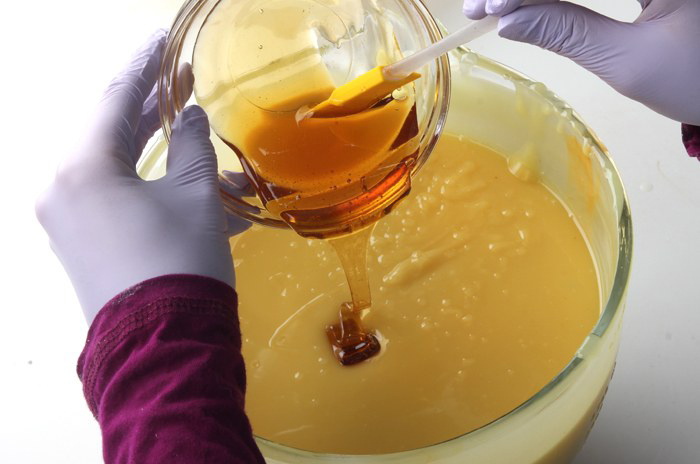
- Honey is a natural humectant. It makes bars feel lovely, but it also makes them more likely to sweat, especially in humid climates. If you're adding honey to a recipe and you live somewhere with regular humidity above 60 to 70%, sweating will be harder to control.
- Castor oil attracts moisture in a similar way. It's excellent for lather, but higher percentages above 10% in a humid environment can contribute to a consistently tacky or damp bar surface.
- Added salt (sodium chloride) is hygroscopic on its own. Salt bars are known to sweat persistently in humid weather, sometimes for months after cure. This is not a formulation error. It's the nature of the sodium chloride content.
- High liquid oil content generally produces a softer, more porous bar that absorbs environmental moisture more readily. A recipe balanced with hard fats like coconut oil, palm oil, shea butter, or cocoa butter will be firmer and more resistant to surface moisture.
You don't have to eliminate any of these ingredients. But if recurring sweating is a problem, your recipe is worth examining alongside your storage conditions. Bramble Berry’s cold process soap projects have tested formulas that already account for this kind of balance, and the full cold process soap supplies catalog has everything you need to start adjusting your oil ratios.
How to Prevent Cold Process Soap Sweating
You can't fully eliminate sweating if you live in a humid climate and make bars with natural glycerin, but you can reduce it significantly.
Start with these:
- Cure in a ventilated space. A wire rack with airflow on all sides in a room with consistent temperature is ideal. Avoid bathrooms, basements, and enclosed cabinets during cure.
- Run a fan. Airflow helps wick surface moisture away from bars as they cure. This works well in moderately humid climates.
- Invest in a dehumidifier. For makers in consistently humid environments, this is the most reliable long-term solution. Keeping your soaping room below 50 to 60% relative humidity makes a significant difference, and it benefits bath bombs and other humidity-sensitive products too.
- Use silica gel packets or uncooked rice. Place them near or inside a container with your curing bars to absorb ambient moisture. This works well for finished bars you're storing or shipping.
- Wrap cured bars in plastic wrap or shrink wrap. Wrapping immediately after cure protects bars from air exposure and prevents glycerin dew from forming on the surface. This is especially useful if you're storing large quantities before market days.
- Avoid the freezer during unmolding. If you're placing soap in the fridge or freezer to speed up demolding, keep it brief. Temperature changes cause condensation, and bringing a cold bar into a warm room is a reliable way to trigger sweating.
If sweating is one of several issues you've been running into, the common coap making mistakes article covers a lot of the other common ones in one place.
What to Do If Your Soap Is Already Sweating
If you're looking at a damp bar right now, don't toss it.
- Pat the surface gently with a clean, dry cloth or paper towel to absorb the droplets.
- Move the bars to a drier room and place a fan nearby.
- Let them sit uncovered for 24 to 48 hours.
- Once dry, wrap immediately and store in a cool, dry place.
The soap is still fully usable. Glycerin dew clears up once the humidity drops or the environment changes. The bar's lather, cleansing performance, and shelf life are not affected.
People Also Asked
Does cold-process soap sweating mean the soap is still lye-heavy or unsafe?
No. Sweating is caused by glycerin attracting moisture from the air, not by residual lye. If you want to confirm your soap has fully saponified, do a simple zap test: touch the tip of your tongue briefly to a small piece of soap. If it zaps or tingles like a battery, it needs more curing time. If it just tastes like soap, saponification is complete, and the sweating is purely environmental.
Why does my soap sweat even after a full 4 to 6 week cure?
A complete cure removes excess water from the bar but doesn't remove the glycerin. That glycerin stays in the soap permanently, and it's part of what makes handcrafted cold process bars so nourishing. In humid climates, a fully cured bar will still sweat whenever ambient humidity is high enough for the glycerin to attract surface moisture. The fix is storage and environment, not longer curing.
Can salt bars be formulated to sweat less?
You can reduce sweating in salt bars by keeping your salt percentage on the lower end, using a water discount in your lye solution to produce a firmer, denser bar, and wrapping bars immediately after cure. A recipe with a higher percentage of hard oils will also produce a more moisture-resistant bar overall. That said, some sweating is expected with salt bars in humid environments. It's part of the nature of the sodium chloride content.